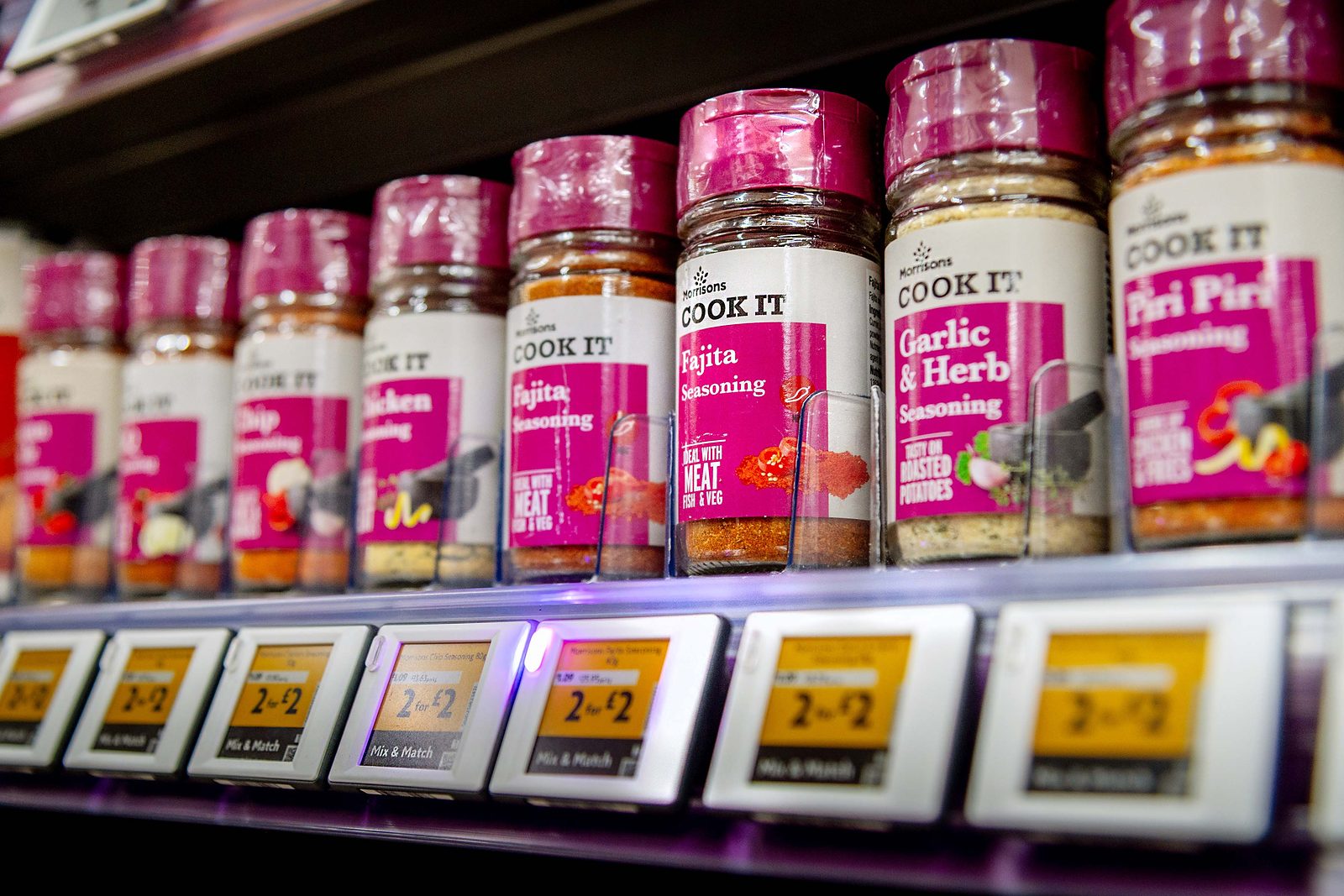
electronic shelf labels
UK convenience stores' electronic shelf label use hits 14% as Shelftalker adds branding and QR codes
Electronic shelf labels in UK convenience stores are starting to do more than show prices. New provider Shelftalker sells subscription software that puts store branding, QR codes, loyalty offers and reduced-to-clear status on the label, replacing paper promotions that staff still have to swap by hand.

Key takeaways
- ACS: 14% of UK convenience stores use electronic shelf labels, up from 12% in 2025.
- Shelftalker adds branding, QR codes, product images, loyalty and reduced-to-clear status to labels.
- Software costs £59 a month; packages with hardware start at £6.99 a day.
- The company could not yet give examples of cost savings or sales gains.
Why it matters
For independent convenience stores and small chains, a monthly fee lowers the barrier to going digital, and labels that carry price, promotion and loyalty messages could cut the paper-swapping workload. But the supplier has not yet published cost-saving or sales results, so store owners should ask for evidence before signing up.
What the labels can show
According to Better Retailing, Shelftalker's tools let shops add their own or their symbol group's branding, QR codes, product shots, loyalty schemes, promotional messages, meal deal inclusion and reduced-to-clear status to electronic shelf-edge labels.
Adrian Page, Shelftalker's head of commercial, said the product addresses a common problem for stores that have already invested in electronic labels: they still rely on paper promotional material that has to be updated regularly. "When you've got a digital shelf-edge label there already, why would you want to then overlay it with a paper process? It just doesn't make sense," he told the publication.
Adoption and cost
The Association of Convenience Stores' Local Shop Report 2026 puts electronic shelf label use at 14% of UK convenience stores, up from 12% in 2025.
Page attributed the rise to a "tipping point" where falling label costs and rising labour costs make paying staff to change paper labels uneconomical. "Ten years ago, labels were an expensive piece of hardware. That hardware cost has come down significantly while minimum wages have nearly doubled," he said.
Shelftalker's software works on existing or supplied labels and costs £59 a month. Packages including labels, software, fittings, set-up and support start at £6.99 a day.
Results still to be shown
When asked, the company could not give examples of cost savings or sales increases after installation, saying it was focused on improving how the labels look. Page said retailers with existing systems were showing interest, including a couple of multi-site operators that have had electronic labels for a few years.
Shelftalker has also worked on new installations, including 3,200 labels at Freedom Convenience's Morrisons Daily store in Kingsthorpe, Northamptonshire, and 1,500 at Spar Laurels Service Station in Lincolnshire.
Background
Electronic shelf labels receive prices wirelessly from a central system and have mostly been associated with large supermarkets. ACS figures show convenience-store adoption in the UK rising from 12% in 2025 to 14%. Page links the growth to falling hardware prices and minimum wages that have nearly doubled over a decade.
What to watch
- Whether Shelftalker can publish measured cost savings or sales gains from installed stores.
- Whether multi-site retailers with older label systems adopt add-on software.
- Whether the next ACS report shows convenience adoption continuing to climb.
Sources
Questions
How many UK convenience stores use electronic shelf labels?
According to the ACS Local Shop Report 2026, 14% of UK convenience stores use electronic shelf labels, up from 12% in 2025.
How much does Shelftalker cost?
The software costs £59 a month on existing or supplied labels. Packages including labels, software, fittings, set-up and support start at £6.99 a day.
Does it save money?
There is no published evidence yet. Better Retailing reports the company could not give examples of cost savings or sales increases when asked.